Insights

While the CoE-DSC strengthens the Dutch data sharing community, DSSC supports the development and interoperability of data spaces at European level. How do their roles complement each other, and what does their collaboration mean for organisations looking to scale?
The Dutch government has responded to concerns about European organisations' dependence on foreign digital services, following US sanctions against an Italian internet provider. The response highlights the importance of digital sovereignty, reducing strategic dependencies and ensuring continuity of essential digital infrastructure. But what steps are being taken to protect European organisations?
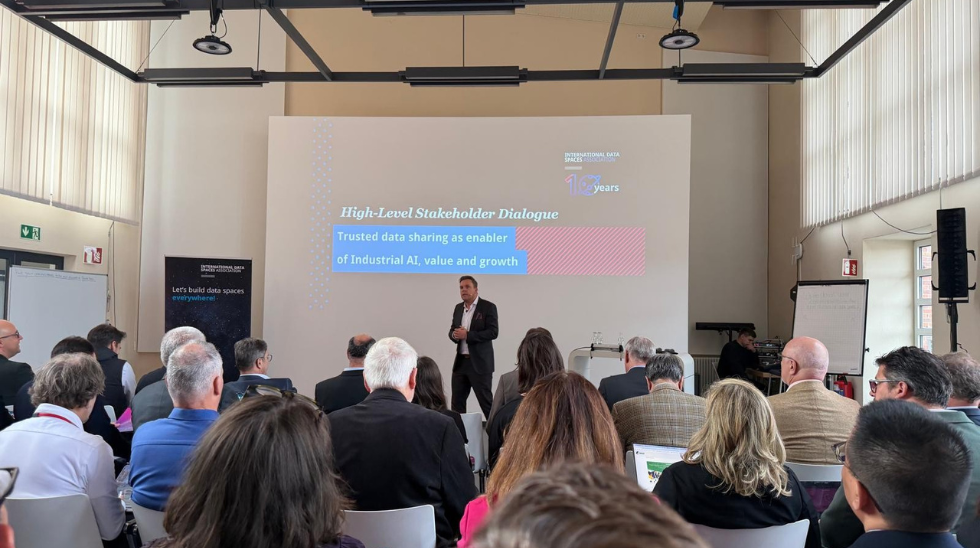
On 3 November, CoE-DSC joined international data sharing leaders in Berlin for the IDSA Data Spaces Decade Forum, marking ten years of the International Data Spaces Association. Discussions focused on moving towards large-scale adoption of data spaces, with effective governance, sustainable business models and stronger European cooperation identified as key priorities.
Commissioned by the Dutch Ministry of Agriculture, Fisheries, Food Security and Nature (LVVN) and carried out in collaboration with NVWA, TNO explored how DPPs could create value within the agricultural domain, using a digitalised plant passport as their first concrete DPP use case. Their proof of concept shows how plants could become digitally traceable through the entire supply chain.
How can we prevent the growing landscape of data spaces and data-sharing initiatives from becoming a source of fragmentation itself? The challenge is not to make everything the same, but to make conscious decisions about what can be reused, where harmonisation is needed, and where there should remain room for domain-specific choices.
Privacy Enhancing Technologies (PETs) make it possible to extract value from sensitive data without exposing the underlying information, but large-scale adoption remains limited despite successful pilots. According to Sarah van Drumpt (TNO) and Dave Buckley (OpenMined/UN PET Lab), the main challenge is no longer the technology itself, but creating the right conditions around governance, legal certainty and organisational readiness.
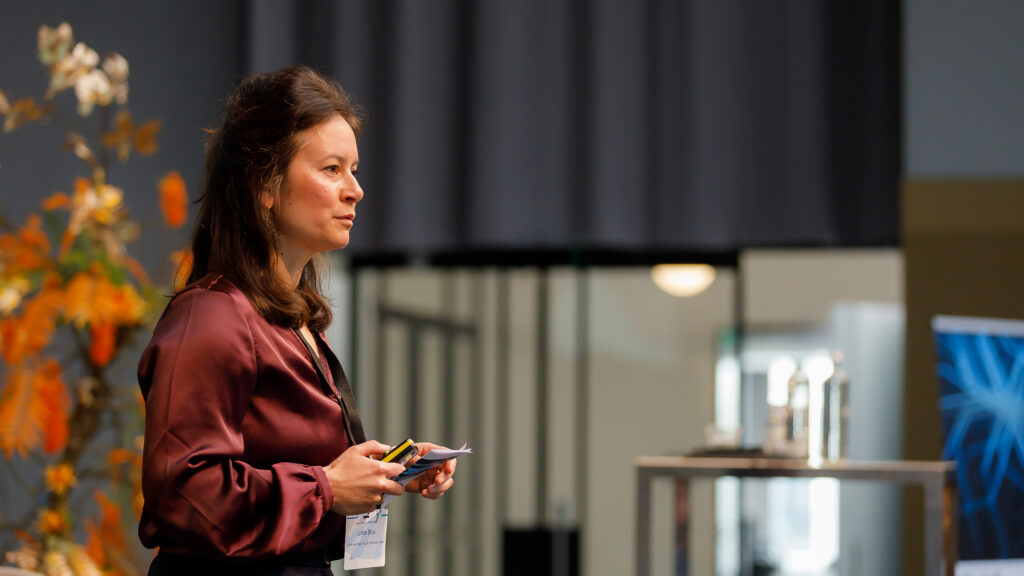
According to Linda Bos, Director of the KLM Engineering & Maintenance Technology Hub, aviation cannot wait for new generations of electric or hydrogen-powered aircraft to become more sustainable. Through the Hyperion project, KLM and its partners are exploring how data sharing and collaboration can contribute to more sustainable and future-proof aircraft maintenance.
Discover how secure data sharing can unlock new opportunities for organisations in the built environment. This sector-focused event explores the European Data Strategy, the role of data spaces, and practical approaches to trusted data sharing. Gain valuable insights, learn from real-world examples, and connect with experts driving innovation across the Dutch built environment.
The latest edition of CoE-DSC’s Data Sharing Architects Community brought together professionals from across the public and private sectors to exchange knowledge, share practical experiences and strengthen interoperability. With expert presentations, interactive workshops and valuable networking opportunities, the event highlighted the growing momentum behind collaborative data-sharing initiatives in the Netherlands.
Strong contributions and a substantive panel discussion characterised the CoE-DSC Strategy Meeting ‘Steering for cloud sovereignty’ on 18 June in The Hague, all grounded in concrete, action-oriented perspectives. Only by connecting public and private parties, and aligning supply and demand, we can achieve federated solutions that give organisations greater control and reduce digital dependence.
At the Gaia-X Tech-X & Hackathon #9 in Athens, CoE-DSC and TNO played a prominent role in advancing trusted data sharing and interoperability within the European digital ecosystem. A major highlight was the CoE-DSC/TNO team winning the first prize at the hackathon, achieved with an AI-powered solution that enhances trusted collaboration between digital services. The event also showcased important progress in trust and compliance frameworks that support the future development of interoperable European data spaces.
Considerable effort is being invested in interoperability, standards and infrastructure, but far less attention is being paid to demonstrating the real-world benefits these developments deliver. The Data SVP! team aims to change that.

NEN has launched the public consultation for Trusted Data Transaction (TDT) Part 3: a standard for interoperability requirements. This means that Dutch stakeholders can review the draft and submit comments […]

Today, the Open Cloud Alliance (in Dutch: Open Cloud Alliantie, OCA) presented a manifesto for a sovereign government cloud to Michiel Boots, Director-General for Economy and Digitalisation at the Ministry […]

While standardisation is a critical foundation for Digital Product Passports, the adoption of the DPP ultimately will determine its impact in practice. To explore what is needed for and currently hinders DPP adoption, we spoke with Carolynn Bernier (CIRPASS-2 Consortium Coordinator & Senior Research Engineer at Commissariat à l’énergie atomique et aux énergies alternatives, CEA) and Sjoerd Rongen (Digital Product Passports Lead at TNO and coordinator of the Centre of Excellence for Digital Product Passports).