Strong contributions and a substantive panel discussion characterised the CoE-DSC Strategy Meeting ‘Steering for cloud sovereignty’ on 18 June in The Hague, all grounded in concrete, action-oriented perspectives. Only by connecting public and private parties, and aligning supply and demand, we can achieve federated solutions that give organisations greater control and reduce digital dependence.
Breaking free from hyperscalers
Experts Bert Hubert and Simon Besteman made our dependency on hyperscalers unmistakably clear, offering valuable insights and practical examples of how to break free. Simon presented the case of France, which invested €800 million in a sovereign solution, reducing annual licensing costs from €1.2 billion to €600 million.
A solution closer to home comes from the Open Cloud Alliance (OCA). Lammert Vinke (Info Support) and Ludo Baauw (Intermax Group) explained how OCA brings together Dutch cloud providers to deliver a secure and controllable alternative, built on three ‘O’s: open standards, open architecture and open source.
Peter van Burgel of AMS-IX demonstrated, as the first OCA use case, that this approach is not just an ambition but already practical and capable of delivering results.
Get started
Aik van Eemeren (NDS Cloud) provided an update on the Dutch Digitalisation Strategy (Nederlandse Digitaliseringsstrategie, NDS). NDS can play a major role, as the Dutch government can become a launching customer of Dutch/European sovereign cloud solutions and break the status quo. Roel Peeters (Ministry of Economic Affairs and Climate Policy) placed the issue in a European context, mainly by explaining the highlights of the recently announced European Cloud and AI Development Act (CADA). The Dutch Ministry of Economic Affairs and Climate plays an important role in achieving more autonomy in cloud (and other areas), amongst others by funding CoE-DSC.
Barbara Kathmann (House of Representatives) once again proved to be a strong political advocate for digital sovereignty. She stressed the importance of pulling up our sleeves and start doing, together in a public/private collaboration. Also Barbara recognized the role of the Dutch government as launching customer and applauded the results so far of the NDS Cloud team.
Together
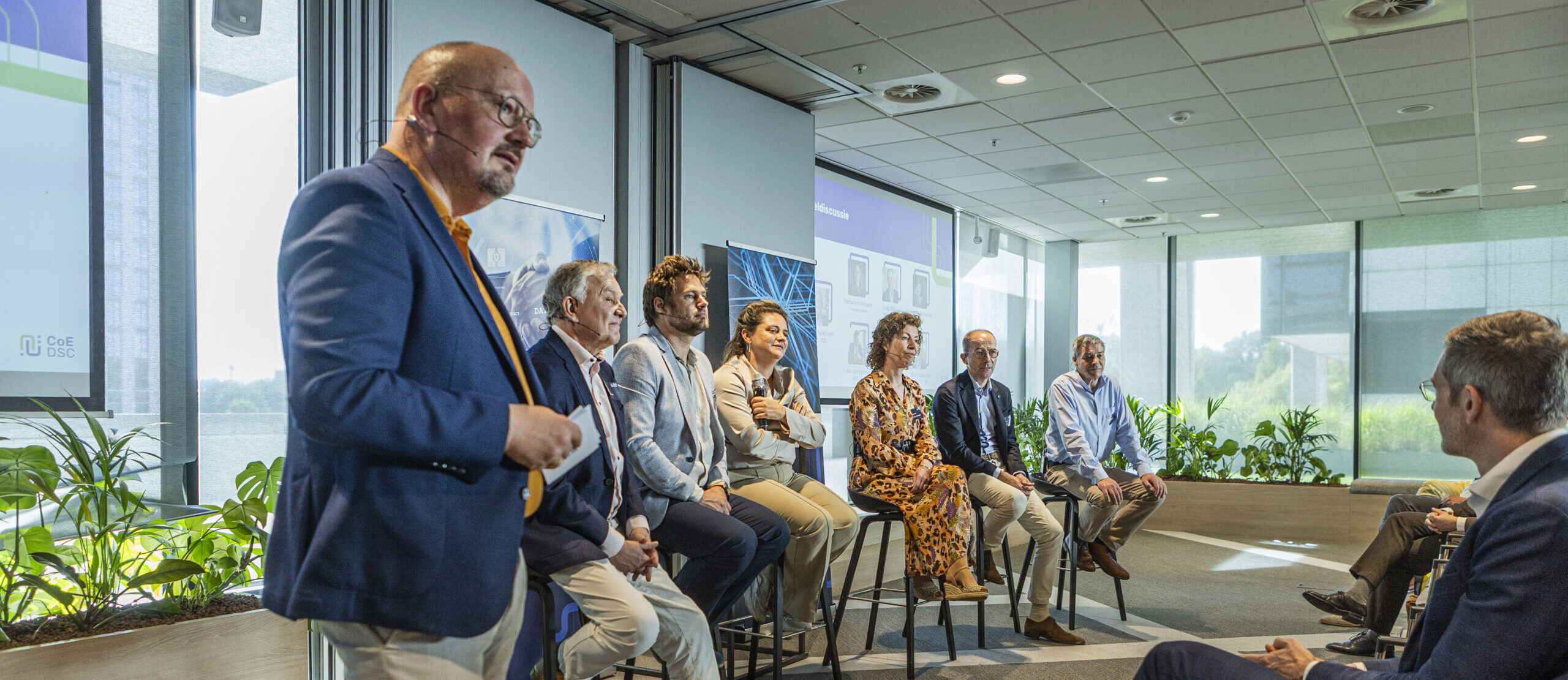
The afternoon concluded with a panel discussion featuring several of the earlier speakers, joined by Stephanie Ottenheijm (Digital Holland) and Bjorn Hakansson (CoE-DSC/TNO). Different perspectives converged into a shared sense of urgency. Collaboration, innovation and policy were identified as key drivers of progress. And above all: we simply need to get started. Moderator Peter Verkoulen (CoE-DSC) closed the session with a call to action: ‘The path to digital independence requires collective action. Let’s start now. And let’s do it together. That is the only way!’.
CoE-DSC will of course build on the energy of this meeting, continuing to develop the momentum, ideas and collaborative spirit that emerged.
Download the presentations from the CoE-DSC Strategy Meeting of 18 June here