Digital Product Passports: from regulation to implementation
Digital Product Passports (DPPs) are set to change how product information is shared across European value chains. By making reliable data available throughout a product’s lifecycle, DPPs can support regulatory compliance, transparency and more circular ways of producing, using and reusing products. Explore what DPPs mean for your organisation and how to prepare for their introduction.
Why the EU is introducing the DPP
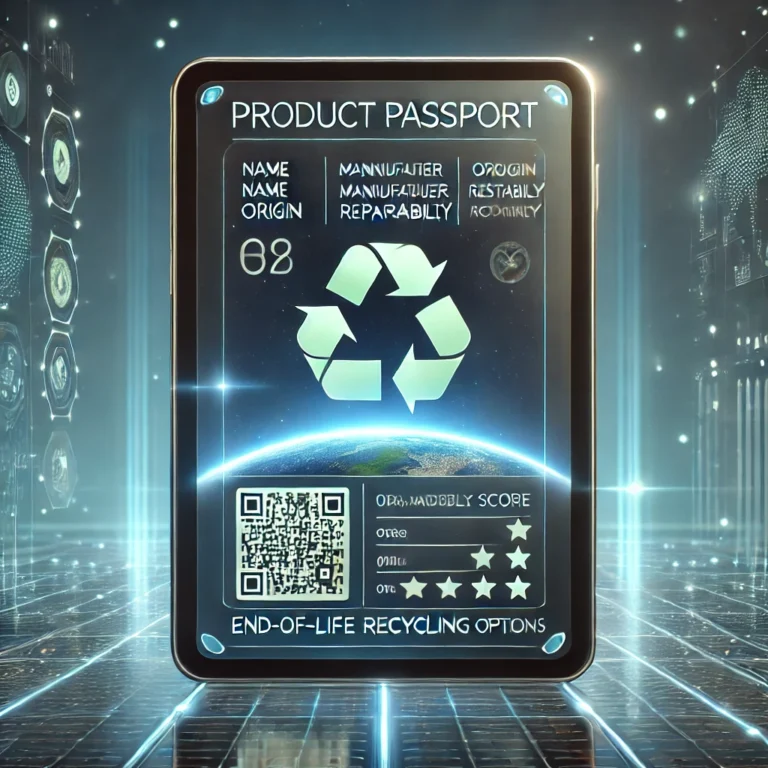
The European Union is introducing the Digital Product Passport (DPP) as part of the Ecodesign for Sustainable Products Regulation (ESPR). A DPP is a digital record containing key information about a product’s composition, origin, environmental impact, and end-of-life options, designed to make data accessible to all actors in the value chain.
From 2027 onwards, product groups such as batteries, textiles, electronics, and construction products will be the first to require a DPP. The goal: enable more sustainable choices and support circular business models by making reliable product data available throughout the entire product lifecycle.
Mandatory vs. voluntary
A mandatory DPP is required by EU regulation for specific product groups (batteries from 2027, textiles and electronics to follow). The data requirements, format, and timeline are defined in delegated acts under the ESPR, or the Construction Products Regulation or one of the other regulations.
A voluntary DPP can be created by any organisation that wants to offer product transparency to its customers, partners, or value chain. Voluntary DPPs follow the same principles but allow more flexibility in scope and content.
What is CoE-DPP?
The Centre of Excellence for Digital Product Passports (CoE-DPP) supports the DPP ecosystem. By connecting knowledge, people, and initiatives, we help companies, governments, and standardisation bodies prepare for, and benefit from, the introduction of DPPs.
CoE-DPP is funded by the Dutch Ministry of Economic Affairs. The activities are part of the Centre of Excellence for Data Sharing & Cloud (CoE-DSC). TNO coordinates the activities of CoE-DSC and CoE-DPP and partners with other organisations, such as GS1, Ketenstandaard, Topsector ICT, Ministry of Economic Affairs and LVVN, and more.
Digital Product Passport Landscape
Explore the growing Digital Product Passport ecosystem. This interactive overview maps organisations, projects and initiatives that contribute to the development and adoption of DPPs across Europe.
Use the landscape to discover who is active in different product groups, understand their role in the ecosystem and identify potential partners or initiatives relevant to your interests.
For additional insights and analysis, see the Dutch Digital Product Passport Landscape Scan report (Version 1.0).
Please note: Some categories, including Policy Maker, Investor, Chemicals, Fuels, Plastics and Food, were added later in the scan. As a result, not all initiatives may have classified themselves under these categories.
Looking for adoption insights?
Read the DPP Adoption Pulse report to learn how organisations are progressing with DPP implementation and where the ecosystem stands today.
What we do
- Build the knowledge base — We compile lessons from use cases, projects, and relevant content developed by others into a structured knowledge hub for DPP implementors and users.
- Contribute to European standardisation — The lessons we learn in the Netherlands are represented in the European context by actively participating in relevant standardisation tracks.
- Coordinate national efforts — We connect Dutch stakeholders to accelerate implementation and ensure alignment with European developments.
We stand for an open ecosystem with multiple solution providers, not a single proprietary approach to DPP. Interoperability, open standards, and vendor neutrality are core to our work.
Explore Digital Product Passports
With so much information available on Digital Product Passports (DPPs), finding the right information can be a challenge. CoE-DPP has organised key topics and linked them to content from official sources and trusted partners.
Explore the themes under Creating a DPP, Using a DPP, Technical, Compliance and Sources. Each page includes a table of contents and expandable sections with relevant information and references.
If you can’t find what you’re looking for or you have other questions, please contact us at info@coe-dsc.nl. We’re happy to help you.
Develop a repository of knowledge for DPP implementors and DPP users
The lessons that we learn in use cases and projects, as well as relevant content developed by others, will be compiled in the Knowledge base within the CoE-DPP. Therefore we would like to invite you to share your knowledge and experiences with us.
Contribute to DPP standardisation
The lessons that we learn in the Netherlands are represented in the European context by actively participating in the relevant standardisation tracks for DPP. This will help parties to develop and implement DPPs that meet the requirements of the European Commission (EC).
The CoE-DPP is funded by the Dutch Ministry of Economic Affairs. The activities of CoE-DPP are part of the Centre of Excellence for Data Sharing & Cloud (CoE-DSC). TNO coordinates the activities of the CoE-DSC (and thus the CoE-DPP).
Do you want to stay informed?
A lot is happening in the field of Digital Product Passports, data sharing and cloud. Stay informed about our activities and relevant news and events.
Subscribe to the newsletter of the Centre of Excellence for Data Sharing and Cloud (CoE-DSC).
Collaboration partners